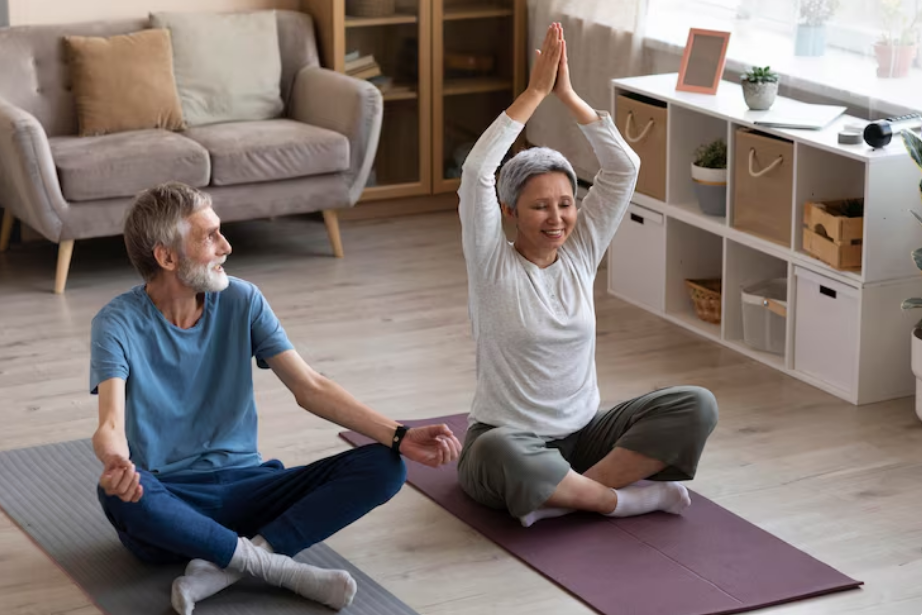
Maintaining a dedicated physical activity regimen is one of the most definitive factors in determining long-term functional independence and overall quality of life during older adulthood. As the human body undergoes natural structural shifts, the primary objective of fitness transitions from high-intensity output toward functional longevity, joint preservation, and fall prevention.
Data compiled from federal aerobic guidelines indicates that regular, structured movement mitigates the risk of chronic illnesses, preserves cognitive faculties, and stabilizes metabolic health. However, high-impact activities that subject the skeletal system to abrupt concussive forces can often exacerbate joint degradation or lead to acute injuries.
Low-impact exercises provide a scientifically validated alternative. By keeping at least one foot firmly on the ground or utilizing stable structural supports, these movements minimize joint strain while delivering profound cardiovascular, muscular, and neurological benefits.
Related Posts
- Navigating the Golden Years: Comprehensive Stress Management Techniques for Healthy Aging Adults
- The Ultimate Guide to the Best Anti-Aging Foods for Healthy, Long-Term Living
- Fueling Longevity: The Ultimate Senior Nutrition Guide for Sustained Health and Vitality
- Comprehensive Guide to Brain Health Activities: Science-Backed Strategies to Improve Memory in Seniors
- The Science of Longevity: Evidence-Backed Habits for an Extended Healthspan
Adopting a daily at-home low-impact routine eliminates common environmental barriers such as transit friction, inclement weather, and specialized gym costs, making physical longevity accessible to every older adult.
1. The Biology of Aging and Why Low-Impact Training is a Biological Necessity
To appreciate the profound value of low-impact physical programming, it is vital to analyze the cellular and structural transformations that occur within the musculoskeletal system over time. Aging introduces distinct physiological shifts that, if left unaddressed by targeted movement, can rapidly compromise autonomy.
Mitigating Sarcopenia and Osteopenia
Beginning around the fourth decade of life, human bodies experience a progressive decline in skeletal muscle mass and functional strength—a condition clinically termed sarcopenia. Simultaneously, bone mineral density declines, shifting toward osteopenia or osteoporosis.
When muscles lose mass, the structural burden of carrying body weight shifts directly onto the skeletal joints. A peer-reviewed GeroScience analysis on healthy aging demonstrates that low-intensity, consistent physical stressors signal the body to preserve lean muscle tissue and stimulate osteoblast activity, the biological mechanism responsible for synthesizing new bone matrix.
Cartilage Preservation and Synovial Fluid Synthesis
Joints require movement to remain lubricated. Unlike muscular tissues, articular cartilage lacks a direct blood supply. It relies entirely on a mechanical process called “fluid pump” mechanisms to receive nutrients.
When a joint undergoes controlled, low-impact compression and extension, it circulates synovial fluid throughout the joint capsule. This lubrication minimizes friction, decreases the inflammatory markers associated with osteoarthritis, and maintains structural elasticity.
Cardiovascular Efficiency Without Systemic Stress
The cardiovascular system requires regular aerobic challenges to maintain myocardial compliance and arterial flexibility. High-impact running or jumping can spike heart rates too rapidly, potentially posing a danger to individuals with underlying cardiovascular conditions.
According to a seminal Canadian Medical Association Journal clinical review, regular, moderate-intensity low-impact physical activity decreases the primary and secondary risks of ischemic heart disease, peripheral vascular conditions, and type 2 diabetes by maximizing systemic circulation without causing excessive, dangerous spikes in blood pressure.
2. Building an Optimal, Hazard-Free Home Gym Atmosphere
Fulfilling a daily exercise routine safely at home requires careful preparation of the physical environment. Because balance and structural stability change over time, executing a quick safety checklist ensures that the home space functions as a supportive training zone.
- Surface Stability: All exercises should be performed on a completely flat, non-slip floor. Thicker plush carpets can destabilize ankle positioning, while highly polished hardwood or tile can present slipping hazards. Utilizing a low-profile, high-traction yoga mat or securing thin carpeting with non-skid underlays provides an optimal surface.
- Space Configurations: Clear a dedicated zone measuring at least six feet by six feet. Ensure there are no loose electrical cords, low coffee tables, or lightweight throw rugs within this perimeter.
- Structural Supports: Keep a heavy, non-folding dining chair or kitchen chair accessible. Avoid any chairs featuring rolling casters, swiveling bases, or flexible armrests, as these can shift unexpectedly under body weight.
- Hydration Stations: Keep water within arm’s reach. As the body matures, the physiological perception of thirst naturally declines, making intentional fluid intake before, during, and after a movement session essential.
3. The Pillars of a Balanced Daily Senior Routine
A truly comprehensive at-home movement strategy must balance multiple fitness domains. Relying solely on one type of exercise can create functional gaps. An idealized daily session blends four distinct mechanical pillars.
Pillar A: Mobility & Dynamic Flexibility
Static stretching before a workout can occasionally reduce muscular output and increase injury vulnerability. Instead, successful routines prioritize dynamic mobility.
Dynamic mobility involves moving joints through their natural, pain-free range of motion without holding the position. This process gradually elevates core body temperature, expands the elasticity of myofascial pathways, and prepares the central nervous system for coordinated movement.
Pillar B: True Balance & Fall Mitigation
A comprehensive healthcare professional outcomes study evaluated the priorities of physiotherapists and kinesiologists regarding geriatric health, revealing that fall reduction, independence, and mobility preservation are considered the single most critical targets of movement interventions.
Balance is a complex neural skill coordinating visual inputs, vestibular (inner ear) tracking, and proprioception—the body’s awareness of its position in space. Daily balance training builds neural pathways that allow for rapid micro-adjustments when navigating uneven surfaces or unexpected obstacles in everyday life.
Pillar C: Progressive Low-Impact Strength
Building muscle does not require lifting heavy external iron plates. Utilizing body weight, gravity, and simple leverage can safely stress muscle fibers enough to trigger hypertrophy, the process by which muscle cells grow and repair.
Focusing on functional patterns like pushing, pulling, and squatting directly improves a senior’s ability to easily stand up from a low sofa, open heavy doors, or carry domestic items.
Pillar D: Steady-State Low-Impact Cardio
Cardiorespiratory endurance ensures that the lungs and heart can deliver oxygenated blood efficiently during extended activities.
Low-impact aerobic movements focus on rhythm and duration over explosive speed, promoting sustained metabolic health and endurance without introducing sudden mechanical shocks to the lower extremities.
4. Step-by-Step Execution of Core Home Exercises
The following exercises form a complete, well-rounded daily routine that targets all four structural pillars. These movements require no specialized equipment and can be safely modified to match various fitness levels.
The Chair Squat (Target: Quadriceps, Gluteals, Core)
The ability to transition from a seated position to a standing position safely is one of the most vital functional movements for maintaining lifetime independence.
- Place a heavy, stable chair against a secure wall to prevent backward slippage.
- Sit comfortably on the front third of the seat cushion, positioning the feet flat on the floor, slightly wider than shoulder-width apart, with toes turned slightly outward.
- Extend the arms straight out in front of the chest at shoulder height to serve as a counterbalance.
- Engage the abdominal muscles, lean the torso forward slightly from the hips, and press firmly through all four corners of both feet.
- Drive upward into a full standing position, fully extending the hips and contracting the gluteal muscles at the top of the movement.
- Begin the descent by pushing the hips backward as if reaching for a distant stool, lowering down with control until the gluteals gently touch the seat cushion. Avoid dropping or collapsing onto the chair.
- Perform 8 to 12 controlled repetitions.
The Wall Push-Up (Target: Pectorals, Anterior Deltoids, Triceps, Deep Core)
Traditional floor push-ups can place excessive, painful pressure on mature wrist joints and shoulders. Shifting the angle to a solid wall reduces the direct load while retaining the full chest- and core-strengthening benefits.
- Stand facing a clear, solid wall, roughly arm’s length away.
- Place the palms flat against the wall at shoulder height and slightly wider than shoulder-width apart, with fingers pointing upward.
- Step both feet backward until the body rests at a slight diagonal angle. Elevate the heels slightly so the body’s weight rests on the balls of the feet.
- Inhale and slowly bend the elbows, lowering the chest toward the wall in a smooth, continuous motion. Maintain a completely straight line from the ears down through the shoulders, hips, and ankles. Do not allow the lower back to sag or the hips to pike backward.
- Exhale and press firmly through the palms, driving the body away from the wall back to the starting position without locking out the elbow joints.
- Complete 10 to 15 smooth repetitions.
The Heel-to-Toe Tandem Walk (Target: Balance, Proprioception, Core Stability)
This exercise replicates the precise neural demands required to maintain a steady center of gravity on narrow pathways or shifting terrains.
- Stand parallel to a long kitchen counter, sturdy wall, or heavy hallway railing, keeping one hand resting lightly on the surface for safety.
- Look straight ahead at an eye-level focal point; avoiding looking down at the feet helps train the vestibular system more effectively.
- Step one foot directly forward, placing the heel of that foot so it touches, or rests immediately in front of, the toes of the back foot—resembling a tightrope stance.
- Pause for one full second to establish total stability, then step the rear foot forward, placing its heel directly in front of the opposite toes.
- Take 10 deliberate steps forward along the support structure, then carefully pivot around and return 10 steps in the opposite direction.
Seated Resistance Rows (Target: Rhomboids, Latissimus Dorsi, Posterior Deltoids)
Maintaining upper back strength counteracts the natural tendency toward a forward-hunched posture, helping to keep the chest open and expanding total lung capacity.
- Sit upright on a stable chair with a tall, straight posture, keeping the feet flat on the floor.
- Extend both arms straight out in front of the torso at chest height, making soft fists with the palms facing inward toward each other.
- Inhale deeply, then exhale while pulling the elbows straight backward, scraping the sides of the ribcage.
- Focus on squeezing the shoulder blades tightly together at the peak of the movement, imagining pinching a small object between them.
- Slowly extend the arms back to the starting position, resisting the forward pull.
- To safely increase the challenge, loop a lightweight resistance band securely around the soles of both extended feet, holding one end in each hand to add gentle tension. Complete 12 to 15 repetitions.
The Bird-Dog (Target: Erector Spinae, Multifidus, Gluteals, Deep Core stabilizers)
A resilient lower back is essential for daily comfort. The bird-dog exercise strengthens the posterior chain across opposite sides of the body, supporting spinal alignment without exposing the discs to heavy compression.
- For individuals comfortable on the floor, begin on an exercise mat on all fours, placing the wrists directly beneath the shoulders and the knees directly beneath the hips.
- Maintain a neutral spine, keeping the gaze directed down at the mat to ensure the neck remains long and uncompressed.
- Slowly extend the right arm straight forward while simultaneously extending the left leg straight backward. Focus on lifting the limbs until they form a straight line parallel to the floor, reaching through the fingertips and driving out through the heel.
- Hold this extended position for two seconds, engaging the core to keep the hips completely level with the floor.
- Slowly return the hand and knee to the starting position, then repeat the movement using the left arm and right leg.
- Modification: If getting down onto the floor is uncomfortable, this exercise can be performed standing up while leaning slightly forward with both hands resting flat on the back of a heavy couch.
- Perform 6 to 8 alternating repetitions per side.
5. Daily Low-Impact Exercise Modality Comparison
To build an efficient schedule, it is helpful to look at how different low-impact exercise styles compare across target zones, physiological benefits, and recommended daily durations.
At-Home Exercise Modalities at a Glance
| Exercise Style | Target Physical Area | Primary Physiological Benefit | Relative Difficulty | Recommended Daily Duration |
| Chair Squats & Extensions | Lower Body (Quadriceps, Gluteals) | Improves sit-to-stand transitions and knee stability | Moderate | 5–10 Minutes |
| Wall & Counter Push-Ups | Upper Body (Chest, Shoulders, Arms) | Enhances pushing strength and upper-body bone density | Light to Moderate | 5 Minutes |
| Tandem Walking & Single-Leg Balance | Central Nervous System & Ankles | Strengthens neuromuscular pathways to mitigate fall risks | Moderate to High | 5–10 Minutes |
| Seated Rows & Arm Circles | Upper Back & Rotator Cuff | Corrects rounded postures and maintains shoulder mobility | Light | 5 Minutes |
| Marching in Place / Step-Touches | Cardiovascular System & Lungs | Enhances endurance and systemic circulation | Light to Moderate | 10–15 Minutes |
6. Overcoming Barriers, Managing Discomfort, and Progress Tracking
Beginning a daily fitness routine requires a mindful approach to reading body signals. For long-term consistency, it is important to understand the difference between normal exercise effort and signs that mean it is time to rest.
Utilizing the Perceived Exertion Scale
Rather than tracking target heart rates with complex calculations, seniors can use the Perceived Exertion Scale parameters to self-regulate daily workouts. This subjective scale ranges from 1 (sitting completely still) to 10 (maximum possible exertion).
For optimal health outcomes, home-based low-impact exercises should target an exertion level between 3 and 5. At this intensity, breathing is deeper but controlled, a light warmth is felt in the muscles, and carrying on a spoken conversation remains comfortable.
Recognizing Safe Discomfort vs. Warning Signs
A common point of confusion is differentiating between normal muscular fatigue and joint strain.
- Muscular Fatigue: A mild, warm ache or heavy sensation within the muscle belly during an exercise is completely safe. This indicates that the muscle fibers are being safely challenged and will grow stronger with rest.
- Joint Strain: Sharp, sudden, pinching, or localized pain within a joint capsule (such as the kneecap, hip socket, or shoulder joint) is a clear sign to stop immediately. Long-term health guidelines, including the 2026 Standards of Care in Diabetes guidelines, emphasize adjusting physical activities based on chronic conditions to protect joint integrity and overall quality of life.
The Importance of Correct Breathing Mechanics
A subtle but critical error during strength movements is holding the breath during moments of high effort—a response known as the Valsalva maneuver. This action causes a sharp, temporary increase in intrathoracic pressure, which can lead to rapid blood pressure spikes and sudden dizziness.
Always maintain a steady breathing rhythm: inhale deeply through the nose during the passive phase of an exercise (such as lowering down into a squat), and exhale fully through pursed lips during the active exertion phase (such as pushing upward to a stand).
7. Frequently Asked Questions (FAQ)
How many minutes should a senior exercise at home each day?
According to public health guidelines, adults should aim for 150 to 300 minutes of moderate-intensity physical activity per week. Broken down into a daily schedule, this translates to roughly 20 to 30 minutes of continuous movement per day. This daily target can be easily divided into two shorter 10- or 15-minute blocks if that feels more manageable.
Can low-impact exercises help manage arthritis pain?
Yes. A comprehensive CDC clinical practice assessment report highlights that structured, low-impact exercise is a highly effective, non-pharmacological strategy for managing arthritis pain and improving joint function. Regular movement stimulates the production of lubricating synovial fluid, which reduces joint friction and relieves stiffness.
Is it safe to perform low-impact strength exercises every single day?
While light cardio and balance drills can be practiced daily, specific muscle groups challenged during strength training require time to recover. It is best to alternate muscle focuses—such as focusing on upper-body movements one day and lower-body movements the next—or schedule two dedicated full-body strength days per week, allowing 48 hours of rest between sessions.
What should be done if balance feels too unstable for standing exercises?
Safety must always be the top priority. If standing exercises feel unstable, adapt the movements to a seated position. Exercises like seated leg extensions, seated marching, arm circles, and seated torso twists deliver excellent muscular and cardiovascular benefits while keeping the body’s center of gravity completely stable and supported.
Do lifestyle choices outside of exercise affect the benefits of a home routine?
Yes, daily nutrition and hydration work hand-in-hand with physical activity. Long-term studies, such as the Cardiovascular Health Study longitudinal data, demonstrate that combining regular physical activity with balanced nutrition significantly increases years of active, independent life. Getting adequate protein supports muscle repair, while consistent hydration keeps joint cartilage healthy and resilient.
8. Conclusion: Embracing Consistency for Long-Term Autonomy
The journey toward lifelong health and mobility does not require complex gym equipment or high-intensity workouts. The human body responds remarkably well to consistent, low-impact movement. By committing just twenty to thirty minutes each day to target mobility, balance, strength, and cardiovascular health, older adults can effectively counter the natural structural declines of aging.
The true secret to success is consistency rather than intensity. Small, deliberate movements performed daily build a reliable foundation of strength and balance, protecting joints and maintaining functional autonomy. Transforming the home environment into a personal space for wellness preserves independence, lowers injury risks, and ensures that the coming years are lived with vitality, confidence, and strength.